
Suna Yoga
BackbendBeginner

Cobra Pose

Bhujangasana

Cobra Pose (Bhujangasana, meaning "serpent" or "snake" in Sanskrit) is a foundational backbend that appears in almost every yoga tradition, from gentle Hatha to the opening sequence of Ashtanga Vinyasa. The pose mimics the shape of a cobra rising from the ground, lifting the chest and broadening the collarbone while keeping the pelvis grounded and the elbows gently bent. This makes it gentler and more accessible than its stronger cousin Upward-Facing Dog, and ideal for anyone building spinal mobility from scratch or returning to practice after a break. Practised regularly, it counters the effects of prolonged sitting and screen time, restoring length to the front of the body and strength to the back.
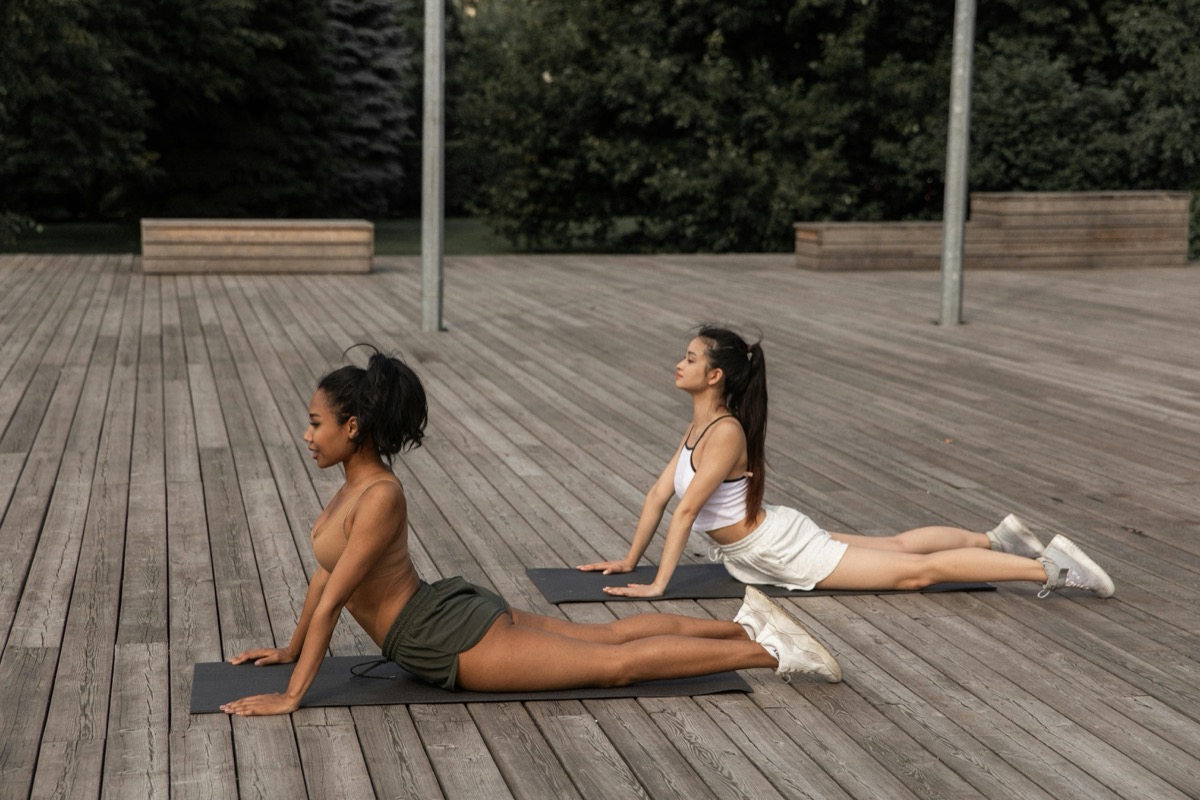
Two women performing Cobra Pose (Bhujangasana) on a wooden platform outdoors

Benefits

  • Strengthens the spine and erector muscles
  • Opens the chest and lungs, improving breathing
  • Firms the buttocks
  • Soothes sciatica
  • Stimulates the abdominal organs

Step-by-Step Instructions

  1. 1

    Lie on your belly with your legs extended, tops of your feet on the mat.

  2. 2

    Place your palms on the mat beside your lower ribs, elbows close to your sides.

  3. 3

    Press the tops of your feet and pubic bone gently into the mat.

  4. 4

    On an inhale, straighten your arms partially to lift the chest.

  5. 5

    Keep a bend in the elbows; this is not a full arm extension.

  6. 6

    Roll your shoulders back and down, broadening across the collarbone.

  7. 7

    Hold for 3–5 breaths, then lower on an exhale.

Common Mistakes to Avoid

  • Fully straightening the arms: low cobra keeps the elbows bent

  • Crunching the neck back: keep it long and neutral

  • Lifting the hips: keep the pubic bone grounded

  • Flaring the elbows: keep them hugging in toward the ribs

Modifications & Variations

  • Keep the elbows deeply bent for a gentler stretch

  • Place hands wider apart to reduce pressure on the spine

Safety Notes

Back injury or surgery: consult a teacher

Pregnancy

Wrist injury

Frequently Asked Questions

What is the difference between Cobra and Upward-Facing Dog?
The key difference is whether the thighs leave the mat. In Cobra, the pelvis and thighs stay on the mat and the elbows remain bent, creating a gentle backbend from the lower back. In Upward-Facing Dog, the thighs and hips lift completely off the mat and the arms straighten fully, creating a much more intense extension through the entire spine. Cobra is appropriate for beginners and anyone with lower back sensitivity; Up Dog requires more spinal flexibility and core strength to practise safely.
How high should I lift in Cobra Pose?
Only as high as you can go while keeping the pubic bone on the mat and the elbows bent. For many beginners, this is just a few centimetres off the mat, and that is absolutely fine. The pose is not about height; it is about length through the spine and openness through the chest. Forcing yourself higher by straightening the arms or compressing the lower back will create strain rather than benefit. Let your range increase naturally over weeks of consistent practice.
Can Cobra Pose help with lower back pain?
It can, but with an important caveat. Gentle backbends like Cobra are often recommended for lower back pain caused by disc issues where forward flexion is the aggravating movement, because the extension creates space at the front of the discs. However, if your back pain is caused by compression or facet joint issues, backbending can make it worse. Always check with a healthcare professional before using yoga therapeutically for back pain, and start with Sphinx Pose, which is even gentler, before progressing to Cobra.

Your Cart

Your cart is empty

Looks like you haven't added anything yet.