
Suna Yoga
BackbendBeginner

Bridge Pose

Setu Bandha Sarvangasana

Bridge Pose (Setu Bandha Sarvangasana, meaning "construction of a bridge" in Sanskrit) is one of the most versatile postures in yoga, functioning as a gentle backbend, a glute and hamstring strengthener, and a restorative chest opener all in one shape. The name describes the pose perfectly: the body arches from feet to shoulders, constructing a bridge between earth and sky. Depending on your intention and energy levels, it can be practised as an active, strengthening posture with full muscular engagement, or as a deeply restorative variation with a block supporting the sacrum and no effort required. Both approaches offer genuine benefits, and most regular practitioners use both at different times.
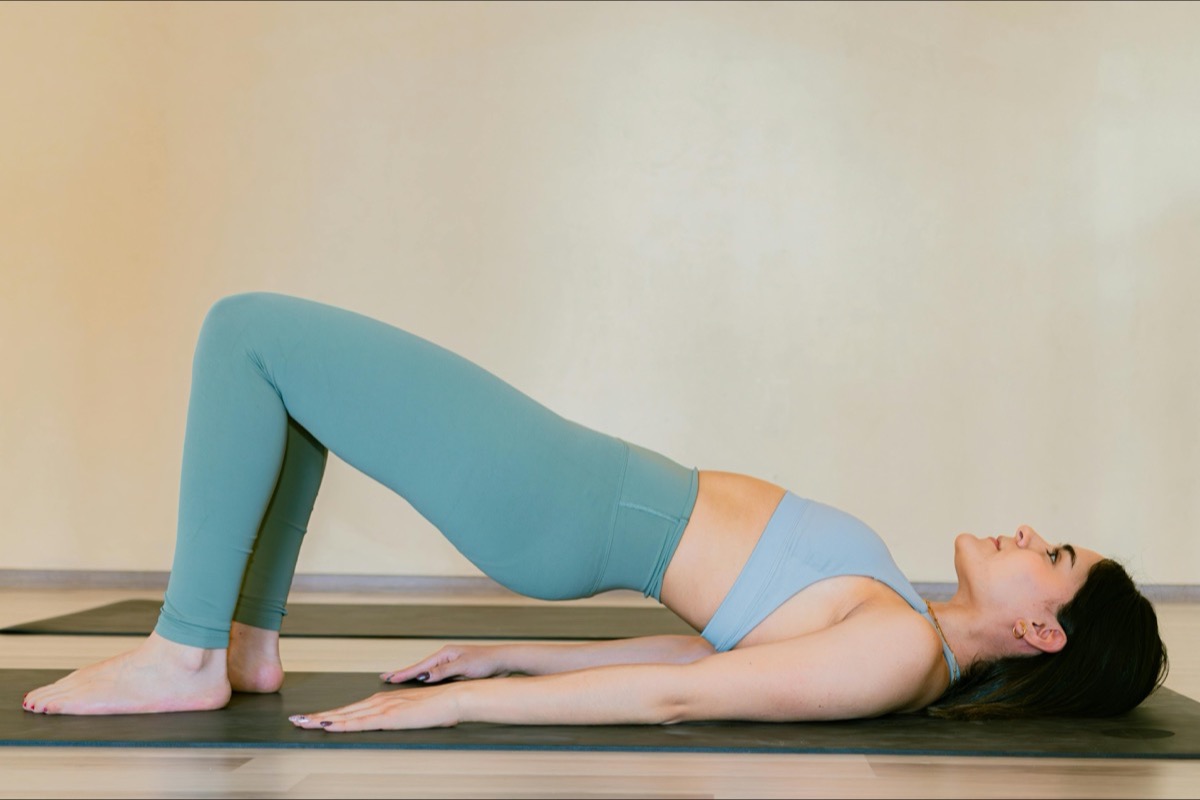
Woman performing Bridge Pose (Setu Bandha Sarvangasana) on a yoga mat indoors

Benefits

  • Strengthens the back, glutes, and hamstrings
  • Opens the chest, heart, and hip flexors
  • Stimulates the abdominal organs, lungs, and thyroid
  • Reduces anxiety and fatigue
  • Relieves mild backache and headache

Step-by-Step Instructions

  1. 1

    Lie on your back with knees bent, feet flat and hip-width apart.

  2. 2

    Place your feet so your fingertips just graze your heels.

  3. 3

    Press your palms and feet firmly into the mat.

  4. 4

    On an inhale, lift your hips toward the ceiling.

  5. 5

    Roll your shoulders under you and interlace your fingers below your back.

  6. 6

    Keep your thighs parallel and your knees above the ankles.

  7. 7

    Hold for 5–8 breaths, then lower vertebra by vertebra.

Common Mistakes to Avoid

  • Knees splaying out: keep them tracking over the feet

  • Clenching the glutes too tightly: use gentle engagement

  • Losing the shoulder roll: keep the chest broad and lifted

Modifications & Variations

  • Place a block under your sacrum for a fully supported, restorative variation

  • Keep the feet wider for a more accessible variation

Safety Notes

Neck injury: avoid tucking the chin too firmly

Back surgery: seek guidance

Frequently Asked Questions

Should I be squeezing my glutes hard in Bridge Pose?
A moderate engagement, yes, but gripping them as hard as possible is counterproductive. Over-squeezing the glutes can cause the knees to splay outward and internally rotate the thighs, which places strain on the lower back rather than relieving it. Instead, engage the glutes enough to lift the hips and keep the pelvis level, while focusing more on pressing firmly through the feet. Think of the feet doing most of the work, with the glutes supporting.
What is the difference between active Bridge Pose and supported Bridge Pose?
In active Bridge, you are muscularly holding the hips up and working the glutes, hamstrings, and back. It is strengthening. In supported Bridge, you place a block under the sacrum at a comfortable height and let the block take the weight, removing all muscular effort. This turns the pose into a gentle, passive backbend that opens the chest and hip flexors without any strain. Supported Bridge is one of the most restorative poses available and is particularly useful after a long day of sitting.
My knees keep drifting apart in Bridge Pose. How do I fix this?
This usually means the hip abductors and outer glutes are not engaging sufficiently. A useful training tool is to place a yoga block between the thighs and squeeze it gently throughout the pose; this activates the inner thighs and automatically keeps the knees in line with the hips. Once you can feel that engagement without the block, you will be able to maintain the alignment on your own. Widening the feet slightly can also help if the issue is particularly persistent.

Your Cart

Your cart is empty

Looks like you haven't added anything yet.