
Downward-Facing Dog
Adho Mukha Svanasana
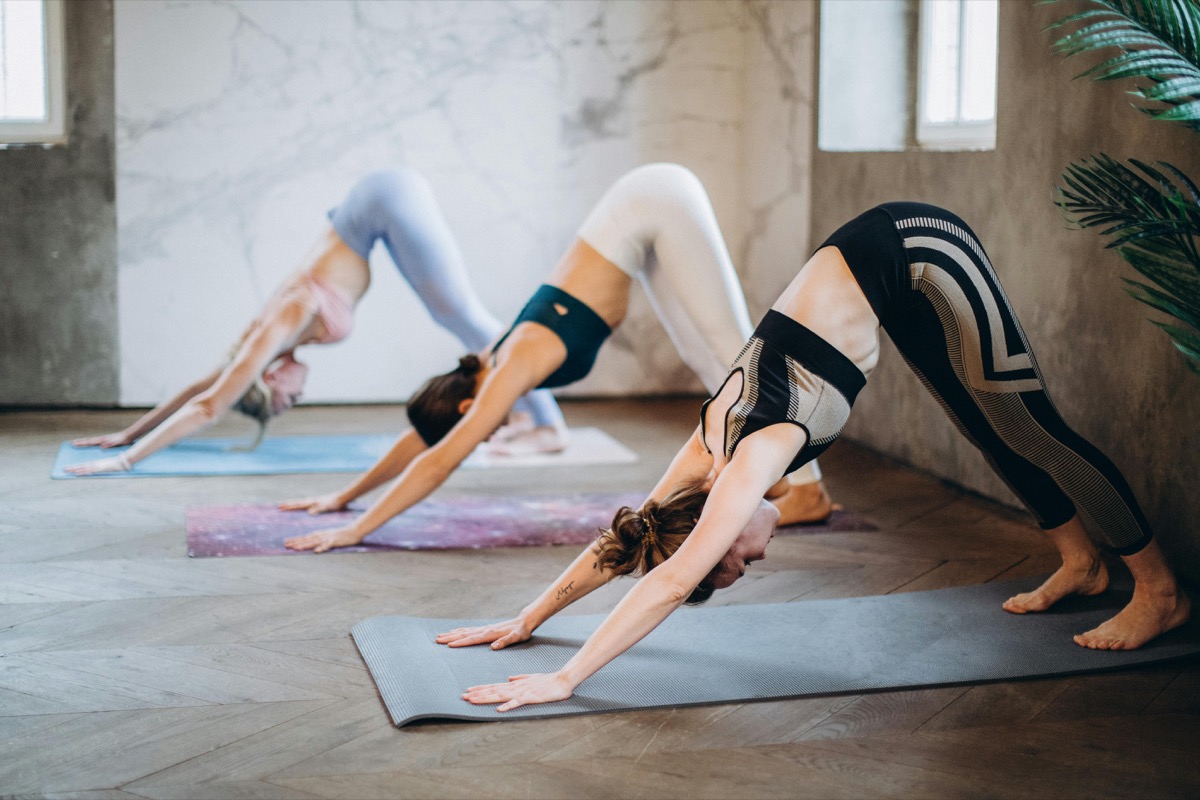
One of yoga's most iconic shapes, Downward-Facing Dog (Adho Mukha Svanasana, meaning "downward-facing dog" in Sanskrit) simultaneously lengthens the entire back of the body while building strength through the arms, shoulders, and core. As a mild inversion, it shifts weight away from the feet, reverses blood flow in the legs, and sends a fresh supply of circulation to the brain, which explains why it is used as a resting pose within flowing sequences. It appears in virtually every style of yoga and is often the first pose that new practitioners commit to memory. Regular practice gradually releases the hamstrings and calves, decompresses the spine, and builds the upper body strength needed for more advanced postures.
Benefits
- Lengthens hamstrings, calves, and the entire back of the body
- Strengthens arms, shoulders, and core
- Gently decompresses the spine
- Calms the nervous system and reduces anxiety
- Improves circulation by sending fresh blood to the brain
Step-by-Step Instructions
- 1
Begin on all fours, wrists below shoulders, knees below hips.
- 2
Spread your fingers wide and press your palms firmly into the mat.
- 3
Tuck your toes and lift your hips up and back to form an inverted V-shape.
- 4
Straighten your legs as much as feels comfortable; a slight bend in the knees is fine.
- 5
Let your head hang freely between your upper arms, ears level with biceps.
- 6
Press your chest gently toward your thighs while lengthening the spine.
- 7
Hold for 5–8 breaths, pedalling your heels alternately to warm up the legs.
Common Mistakes to Avoid
Rounding the upper back: prioritise a long spine over straight legs
Collapsing the wrists: press through all four corners of the palms
Dropping the head too far: keep ears in line with the upper arms
Holding the breath: breathe long and even throughout
Modifications & Variations
Bend your knees generously if hamstrings are tight
Use blocks under your hands to reduce wrist strain
Practice with hands on a chair seat for a gentler variation
Safety Notes
⚠Carpal tunnel syndrome: use fists or wedge props
⚠Late-stage pregnancy
⚠High blood pressure or headache: keep the head above the heart


