
Suna Yoga
RestorativeBeginner

Child's Pose

Balasana

Child's Pose (Balasana, meaning child's posture in Sanskrit) is yoga's universal resting posture and one of the first shapes that new practitioners are taught. Folding the body forward and inward, it mirrors the foetal position and triggers a similar sense of safety and comfort, calming the nervous system almost immediately. It releases tension in the lower back, hips, and thighs, and the gentle compression of the belly against the thighs soothes the digestive organs. Use it to rest between challenging postures, to recover from exertion, or simply to pause and reconnect with the breath whenever the practice feels like too much.
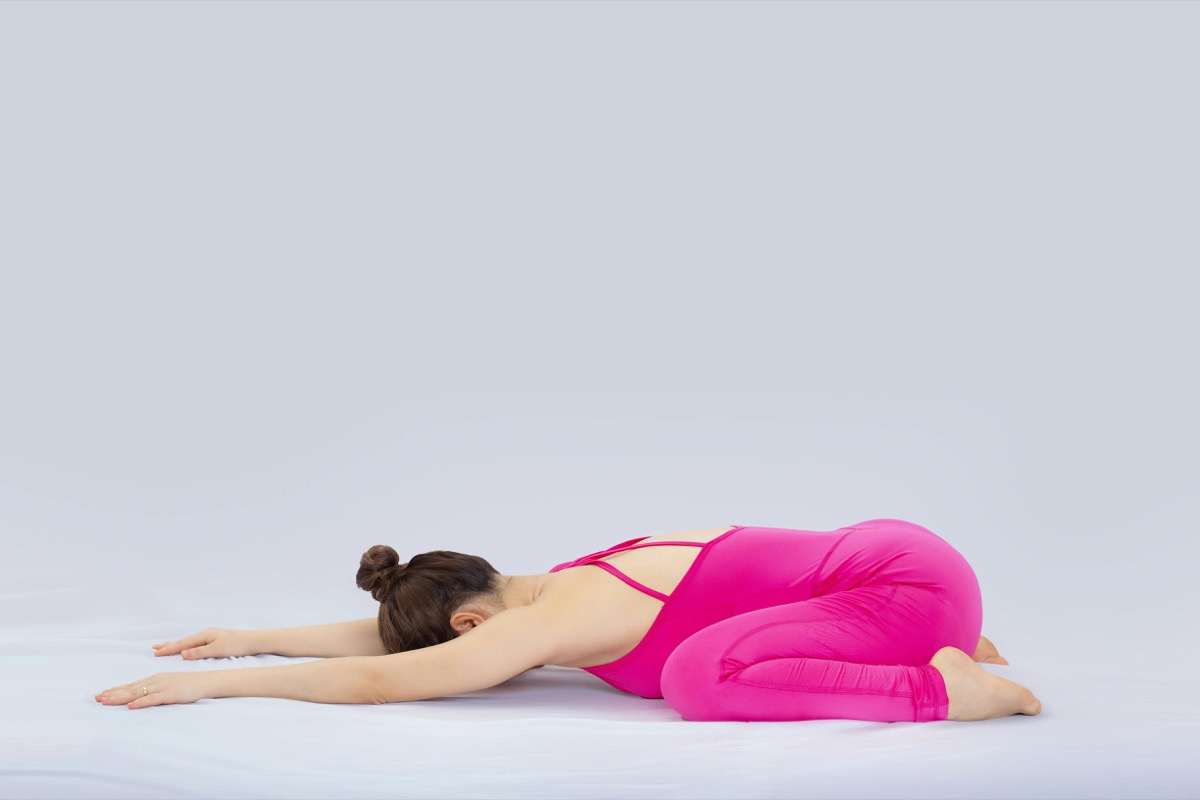
Woman resting in Child's Pose (Balasana) on a yoga mat, forehead to the floor

Benefits

  • Gently stretches the hips, thighs, and ankles
  • Releases tension in the lower back and spine
  • Calms the mind and relieves stress and fatigue
  • Stimulates the digestive system with gentle belly compression
  • Can relieve tension headaches

Step-by-Step Instructions

  1. 1

    Kneel on your mat and bring your big toes to touch behind you.

  2. 2

    Sit your hips back toward your heels.

  3. 3

    Fold your torso forward, walking your hands out in front of you.

  4. 4

    Rest your forehead gently on the mat.

  5. 5

    Allow your arms to extend forward (active) or rest alongside your body (passive).

  6. 6

    Breathe deeply into the back of your body.

  7. 7

    Stay for 5–20 breaths or as long as feels nourishing.

Common Mistakes to Avoid

  • Forcing the hips to the heels: place a blanket between thighs and calves if needed

  • Lifting the forehead: let it rest completely for full relaxation

  • Holding tension in the shoulders: let them melt toward the mat

Modifications & Variations

  • Place a folded blanket between your thighs and calves to reduce knee pressure

  • Use a bolster under your torso for a deeply supported variation

  • Knees can be wide apart (puppy style) to release more hip tension

Safety Notes

Knee injury: use extra padding

Pregnancy: widen the knees to make space

Frequently Asked Questions

Is it okay to stay in Child's Pose for a long time?
Yes, and for most people it is very beneficial to do so. Child's Pose is a restorative posture, meaning it is designed to be held rather than moved through. Staying for two to five minutes allows the nervous system to genuinely downshift, the breath to deepen, and the hips and lower back to release layers of tension that a brief hold will not touch. The only reason to come out sooner is knee discomfort, in which case use extra padding or try a supported variation with a bolster under the torso.
My knees hurt in Child's Pose. What should I do?
Knee discomfort here usually comes from compression at the joint when the heel is not close enough to the sitting bones, or from tight quadriceps that resist the bend. Try placing a folded blanket or a rolled towel in the crease behind both knees before folding forward; this fills the gap and reduces compression significantly. If that does not help, try the pose on your back instead: lie down and hug your knees toward your chest for a similar release without any knee flexion pressure.
What is the difference between active and passive Child's Pose?
In active Child's Pose, you extend the arms long in front of you and press the palms gently into the mat, which creates a mild traction through the shoulders and upper spine. In passive Child's Pose, the arms rest alongside the body with the hands by the feet, and there is no effort at all. Active is better for stretching the lats and shoulders; passive is better for pure rest and nervous system recovery. Most yoga classes use active, but the passive version is worth exploring in your own practice.

Your Cart

Your cart is empty

Looks like you haven't added anything yet.