
Suna Yoga
RestorativeBeginner

Corpse Pose

Savasana

Corpse Pose (Savasana, from the Sanskrit "sava" meaning "corpse") is widely regarded as the most important posture in the entire practice, and also the most difficult. While it asks nothing of the body physically, it demands a quality of conscious stillness that most people never experience in daily life: alert but not busy, rested but not asleep. After active practice, the nervous system needs time to downshift, assimilate, and integrate what has been worked through; Savasana provides exactly that window. Skipping it is one of the most common mistakes new practitioners make: the physical practice plants the seeds, but Savasana is when they take root.
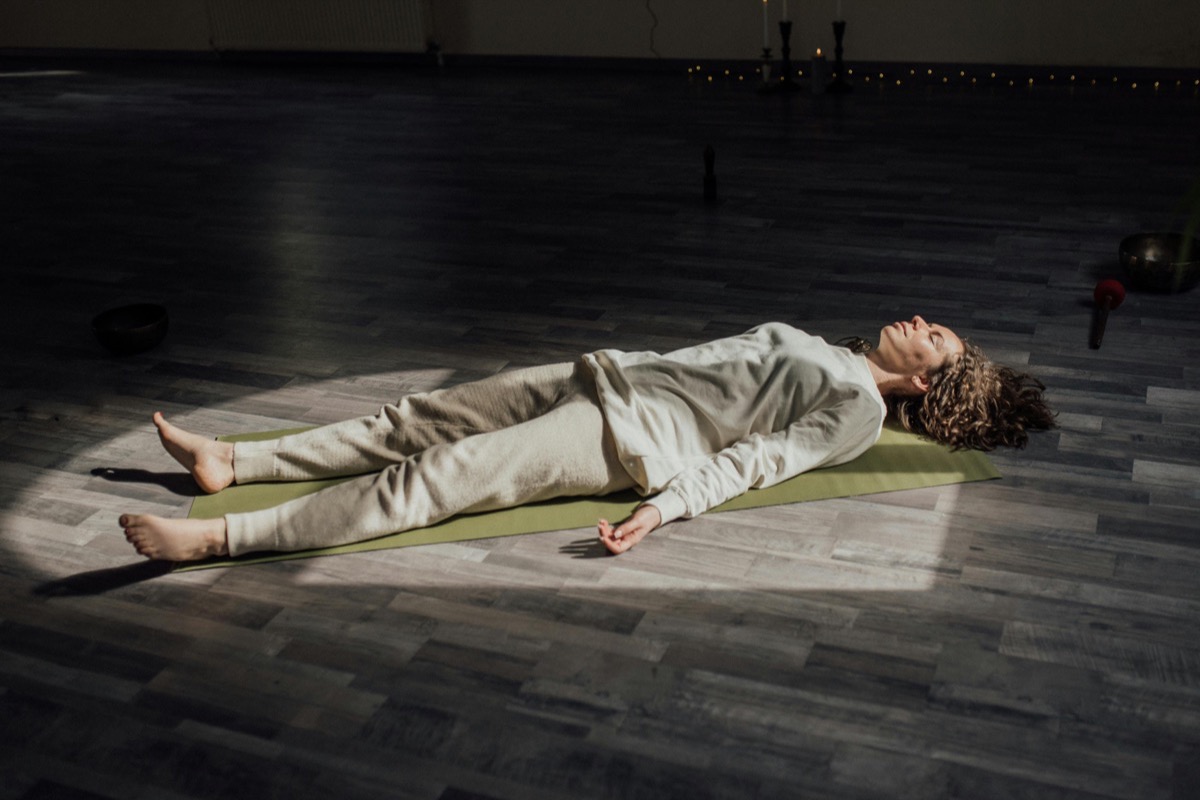
Woman lying in Corpse Pose (Savasana) on a yoga mat, fully relaxed

Benefits

  • Calms the nervous system and promotes deep rest
  • Lowers blood pressure
  • Reduces anxiety, fatigue, and headaches
  • Integrates the physical practice at a cellular level
  • Cultivates pratyahara (withdrawal of the senses)

Step-by-Step Instructions

  1. 1

    Lie on your back on the mat.

  2. 2

    Let your feet fall open naturally, a little wider than hip-width.

  3. 3

    Rest your arms a few inches from your body, palms facing up.

  4. 4

    Close your eyes and let your jaw, tongue, and brow soften.

  5. 5

    Breathe naturally, releasing control of the breath.

  6. 6

    Allow your body to become completely heavy and still.

  7. 7

    Stay for 5–20 minutes.

Common Mistakes to Avoid

  • Falling asleep habitually: set a gentle intention to remain conscious

  • Rushing out of the pose: transition slowly to sitting

  • Staying cold: cover yourself with a blanket if needed

Modifications & Variations

  • Place a bolster under your knees to relieve lower back pressure

  • Use a folded blanket under your head

  • Cover yourself with a blanket for warmth and a sense of safety

Safety Notes

Pregnancy after first trimester: lie on the left side instead

Frequently Asked Questions

Is it bad to fall asleep in Savasana?
Occasionally falling asleep suggests your body really needed the rest, and that is fine. However, if it happens every time you practise, it may mean you are genuinely sleep-deprived, in which case addressing that is more important than the yoga. When you are well rested, the goal of Savasana is to remain consciously still, awake but not busy, which is a much more subtle and demanding skill than sleep. Setting a quiet intention to stay present before lying down can help, as can keeping the eyes slightly open with a soft downward gaze rather than closed.
How long should Savasana be?
The traditional guideline is roughly one minute of Savasana for every five minutes of active practice, so a 60-minute class warrants about 10 to 12 minutes. In practice, five minutes is generally considered a minimum for any benefit, and under two minutes is largely symbolic rather than restorative. If you are short on time, a shorter practice with a proper five-minute Savasana will serve you better than a longer practice where you rush straight to rolling up your mat.
Why does lying still feel so uncomfortable sometimes?
Because we are rarely truly still. Most of us spend the day in constant motion or stimulation, so lying without anything to do or look at can feel strange, even restless. This discomfort is actually the beginning of pratyahara, the practice of withdrawing the senses, which is considered one of the most important and difficult limbs of yoga. Rather than trying to eliminate the discomfort, try observing it with curiosity. Over time, each time you return to stillness, the nervous system learns that it is safe to rest.

Your Cart

Your cart is empty

Looks like you haven't added anything yet.