
Mountain Pose
Tadasana
The foundation of all standing poses, Mountain Pose (Tadasana, meaning "mountain" in Sanskrit) cultivates stillness, awareness, and a quiet sense of strength. Despite looking like simple standing, there is a great deal happening beneath the surface: every muscle in the body is subtly engaged, the spine lengthens through active intention, and the breath becomes the anchor for attention. It teaches you how to simply be present in your body, which is far rarer and more valuable than it sounds. Suitable for every level of practitioner, it is both a starting point and a lifelong practice in itself.
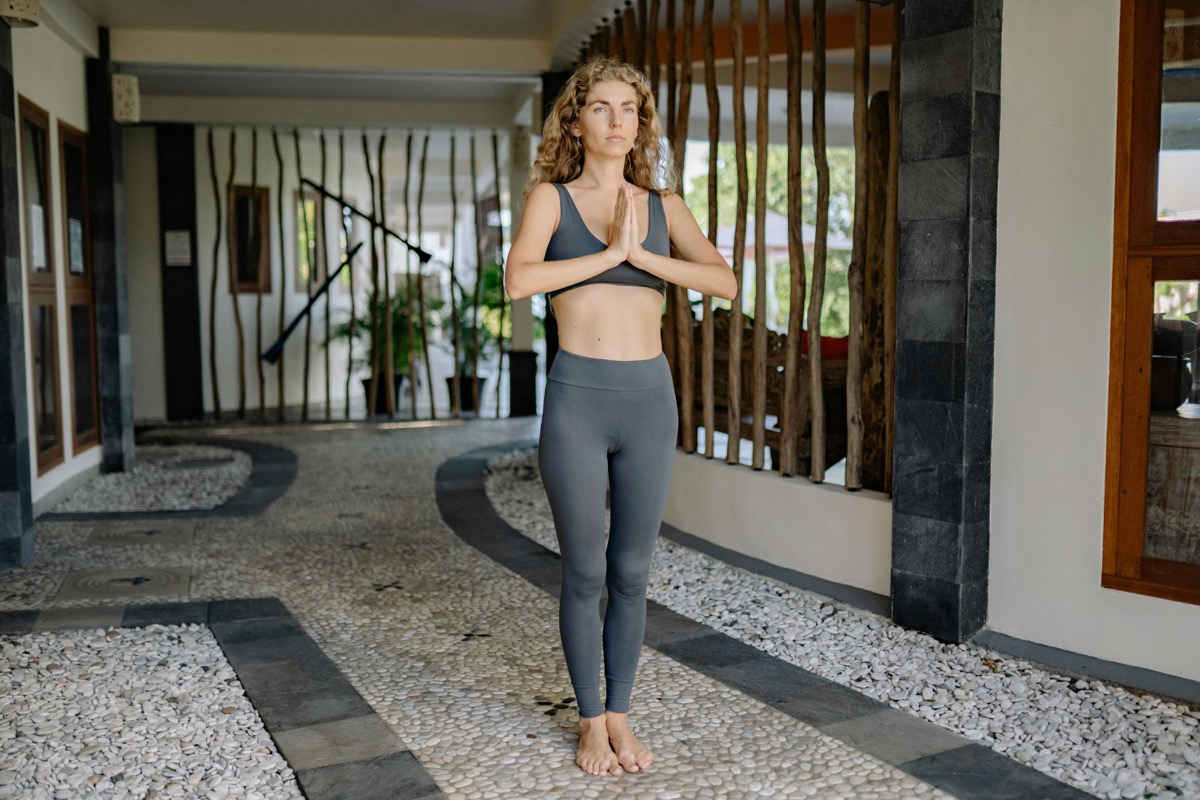
Benefits
- Improves posture and body awareness
- Strengthens thighs, knees, and ankles
- Firms the abdomen and buttocks
- Relieves sciatica and reduces flat feet
- Develops a sense of calm and steadiness
Step-by-Step Instructions
- 1
Stand with feet together or hip-width apart, big toes touching.
- 2
Press all four corners of each foot evenly into the ground.
- 3
Engage your thighs gently, lifting the kneecaps without locking the joints.
- 4
Draw your lower belly in and up, lengthening your tailbone toward the floor.
- 5
Roll your shoulders back and down, letting your arms hang naturally at your sides.
- 6
Lengthen through the crown of your head, creating space in your spine.
- 7
Breathe smoothly and hold for 5–10 slow breaths.
Common Mistakes to Avoid
Locking the knees: keep a micro-bend to protect the joint
Holding tension in the shoulders: let them soften away from the ears
Collapsing the arch of the foot: press all four corners down equally
Thrusting the ribs forward: keep the front body long and neutral
Modifications & Variations
Stand with feet hip-width apart if balance feels uncertain
Practice near a wall for support when first learning
Close your eyes to deepen the inner awareness once stable
Safety Notes
⚠Headache
⚠Low blood pressure: avoid standing for long periods


