
Warrior I
Virabhadrasana I
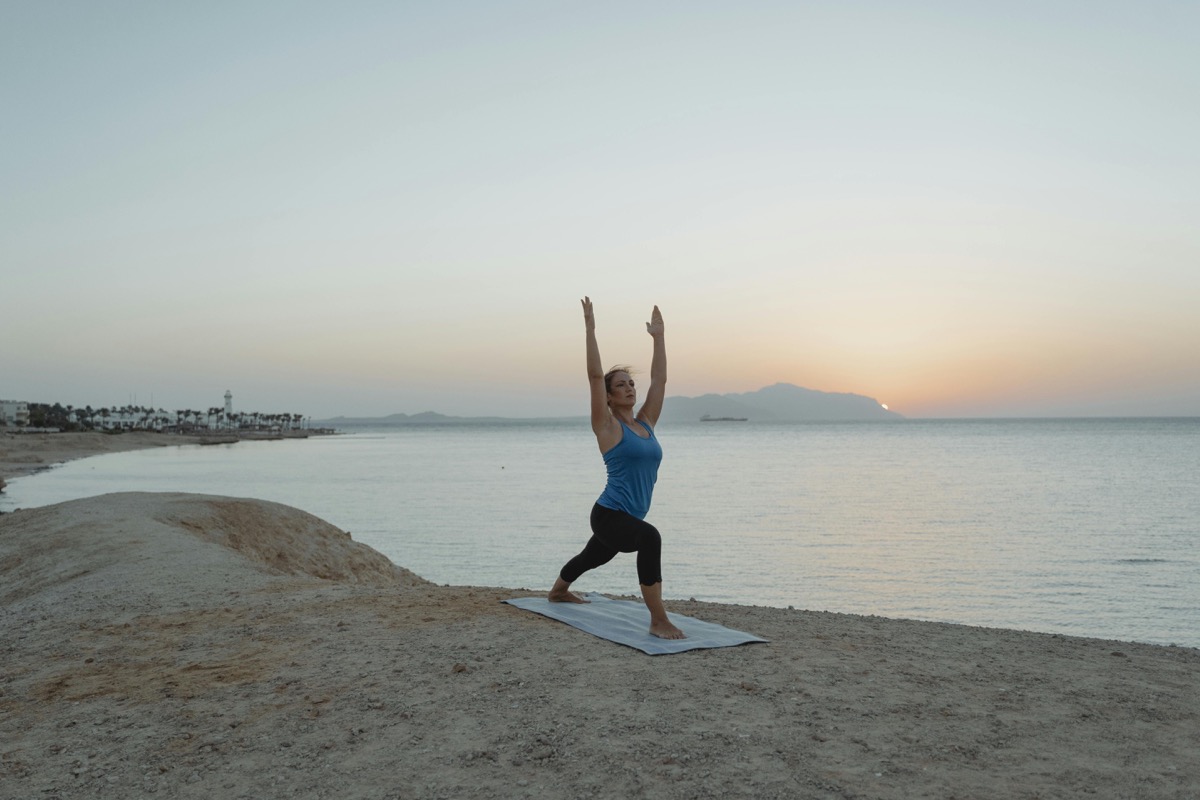
Warrior I (Virabhadrasana I) is named after Virabhadra, a fierce warrior from Hindu mythology, and the pose carries that energy: grounded, courageous, and fully committed. It is one of the most widely practised standing postures in the world, appearing in sequences from Hatha to Vinyasa to Power yoga. Physically, it builds strength through the entire lower body while simultaneously opening the chest, shoulders, and hip flexors, making it both a strengthening and opening posture in one. The challenge of squaring the hips while the legs pull in opposite directions means that even experienced practitioners find something new to work with every time they step into it.
Benefits
- Strengthens the legs, glutes, and core
- Opens the chest, shoulders, and hip flexors
- Improves balance and stability
- Builds stamina and determination
- Stretches the front of the back leg
Step-by-Step Instructions
- 1
From Mountain Pose, step your left foot back about a metre.
- 2
Turn your left foot out to a 45-degree angle and press it flat into the mat.
- 3
Bend your right knee so it tracks directly over the ankle.
- 4
Square your hips to face forward as much as possible.
- 5
Inhale and sweep your arms overhead, palms facing each other or touching.
- 6
Draw your shoulder blades down your back and lift through the chest.
- 7
Hold for 5 breaths, then switch sides.
Common Mistakes to Avoid
Front knee collapsing inward: keep it aligned with the second toe
Overarching the lower back: engage the core to protect the lumbar spine
Back heel lifting: root it firmly into the mat
Hunching the shoulders: keep them relaxed and away from the ears
Modifications & Variations
Shorten your stance if balance is difficult
Place hands on hips instead of raising arms overhead
Use a wall for support if stability is challenging
Safety Notes
⚠Shoulder or neck injury: keep arms at heart centre
⚠High blood pressure: avoid raising arms overhead


