
Tree Pose
Vrksasana
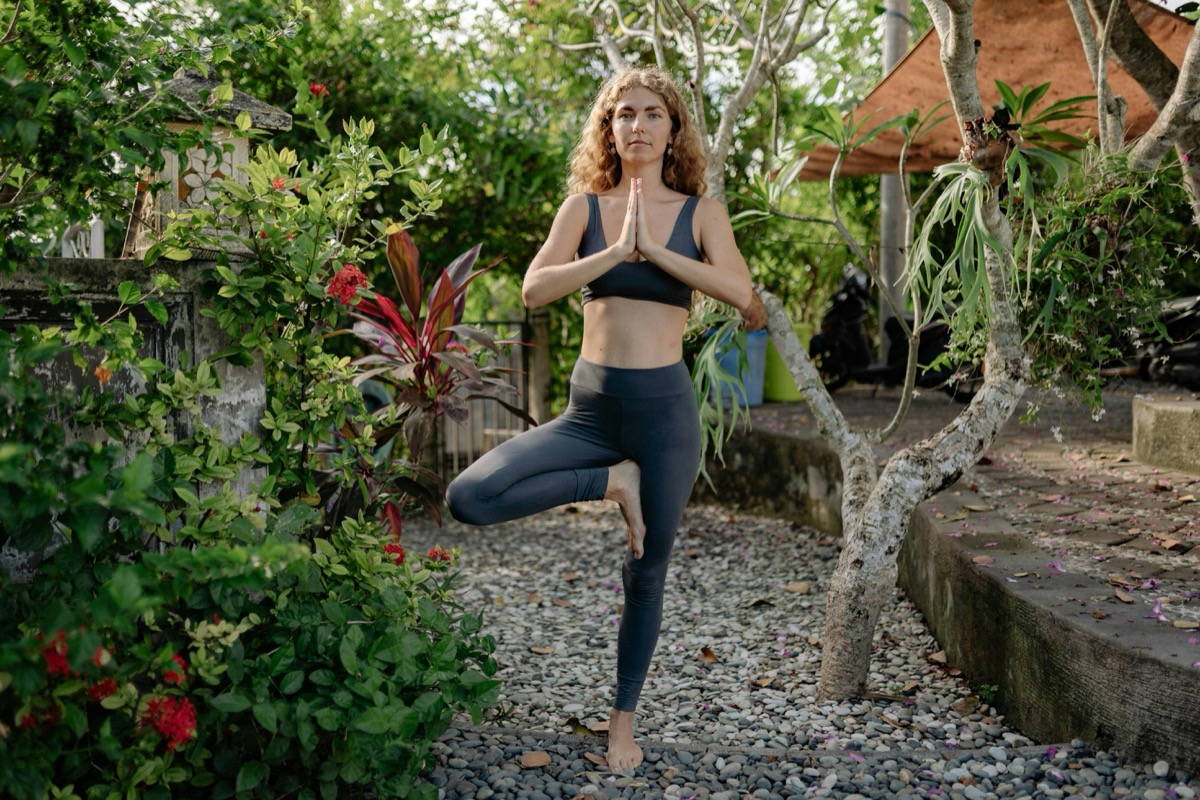
Tree Pose (Vrksasana, meaning "tree" in Sanskrit) is one of the most loved balance postures in all of yoga, combining grace with genuine challenge. Rooting firmly through one foot while the other rests against the inner leg, the body mirrors the shape of a tree: grounded in the earth but reaching upward with ease. It is a perfect metaphor for the yogic ideal of steadiness, in that stability at the base allows freedom at the crown. Suitable for beginners yet endlessly refined by advanced practitioners, Tree Pose is a daily barometer for the state of the mind: calm days bring stillness, busy days bring wobbles, and both are equally valid.
Benefits
- Improves balance and proprioception
- Strengthens the ankles, calves, and thighs
- Opens the hips and inner groin
- Builds concentration and mental clarity
- Stretches the inner thigh of the raised leg
Step-by-Step Instructions
- 1
Stand in Mountain Pose with feet together.
- 2
Shift your weight onto your left foot and press it firmly into the mat.
- 3
Place the sole of your right foot against your left inner calf or inner thigh (avoid the knee).
- 4
Bring your palms together at your heart or raise them overhead.
- 5
Fix your gaze on a still point in front of you.
- 6
Hold for 5–8 breaths, breathing steadily.
- 7
Lower and repeat on the other side.
Common Mistakes to Avoid
Placing the foot against the knee: this stresses the joint; use the calf or inner thigh instead
Gripping the standing toes: spread them wide and relax
Looking around: keep your drishti (gaze) fixed to maintain balance
Modifications & Variations
Rest the toes of the raised foot on the mat for a lighter version
Use a wall for support
Practice near a chair if balance is challenging
Safety Notes
⚠Recent ankle or knee injury
⚠Insomnia: too stimulating before bed


