
Warrior II
Virabhadrasana II
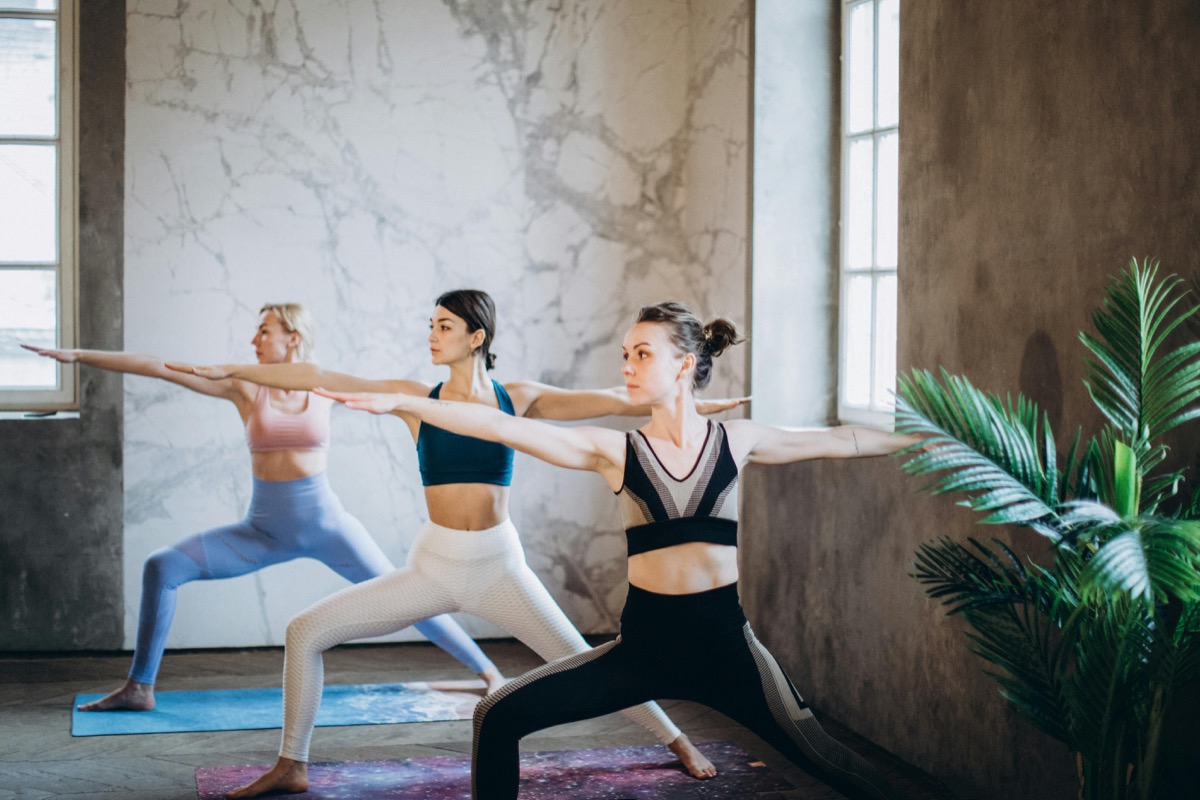
Wide-legged and open-hearted, Warrior II (Virabhadrasana II) is one of the most recognisable yoga postures in the world and a cornerstone of almost every standing sequence. Named after the same mythological warrior as Warrior I, this variation faces sideways rather than forward, expanding the body laterally and shifting the quality of the pose from focused drive to broad, steady openness. It builds powerful legs through sustained isometric effort, stretches the inner thighs and groin, and trains the shoulders to float with ease rather than grip. The unwavering outward gaze, called drishti, is as much a mental practice as a physical one.
Benefits
- Strengthens and tones the legs and ankles
- Opens the hips, chest, and shoulders
- Improves concentration and stability
- Stimulates abdominal organs
- Relieves backaches during second trimester of pregnancy
Step-by-Step Instructions
- 1
Stand with feet about a metre apart.
- 2
Turn your right foot out 90 degrees and your left foot in slightly.
- 3
Bend your right knee so the thigh is parallel to the floor.
- 4
Extend your arms to shoulder height, parallel to the floor, palms facing down.
- 5
Gaze over your right fingertips with a steady, soft focus.
- 6
Keep your torso upright and your shoulders stacked over your hips.
- 7
Hold for 5–8 breaths, then repeat on the left side.
Common Mistakes to Avoid
Front knee falling inward: press it toward the outer edge of the foot
Leaning forward or backward: keep your torso perfectly upright
Tensing the shoulders: let the arms float from relaxed shoulders
Collapsing the back arch: lengthen through the crown of your head
Modifications & Variations
Use a chair for support under the front thigh if needed
Reduce the depth of the bend to reduce knee pressure
Safety Notes
⚠Diarrhoea
⚠High blood pressure: avoid if uncontrolled
⚠Recent knee or hip injury


